Don't Squeeze in an Island: 10 Rules for a Kitchen You Can Actually Cook In
If you are planning a renovation this year, here are my 10 design non-negotiables. These are the details that turn a "nice" kitchen into a truly functional, high-end space.
We have all been there. You scroll through Instagram or Pinterest, saving images of stunning marble backsplashes and brass hardware, dreaming of how good your new kitchen will look.
But here is the hard truth I tell all my clients: You look at the aesthetics, but you live with the ergonomics.
A beautiful kitchen that functions poorly is just an expensive source of daily frustration. If you can’t open the dishwasher while someone is cooking, or if you have nowhere to put a hot tray down next to the oven, the "wow factor" wears off very quickly.
If you are planning a renovation this year, here are my 10 design non-negotiables. These are the details that turn a "nice" kitchen into a truly functional, high-end space.
1. Prioritise Drawers Over Cupboards
If there is one thing you take away from this list, let it be this. Stop building lower cabinets with shelves. Items get lost in the dark back corners, never to be seen again. Deep drawers offer incredible accessibility. You pull them out and can see everything at a glance. They are ergonomic, efficient, and maximise every inch of storage.
2. Layer Your Lighting
A single grid of spotlights is a mood killer. A luxury kitchen needs three layers of light:
Ambient: Your general overhead light.
Task: Hardwired under-cabinet lighting so you can actually see what you are chopping.
Accent: This is the magic dust. Think wall lights, shelf lighting, or even a small table lamp on the worktop to add warmth and atmosphere in the evening.
3 Check Your Clearances (The Island Rule)
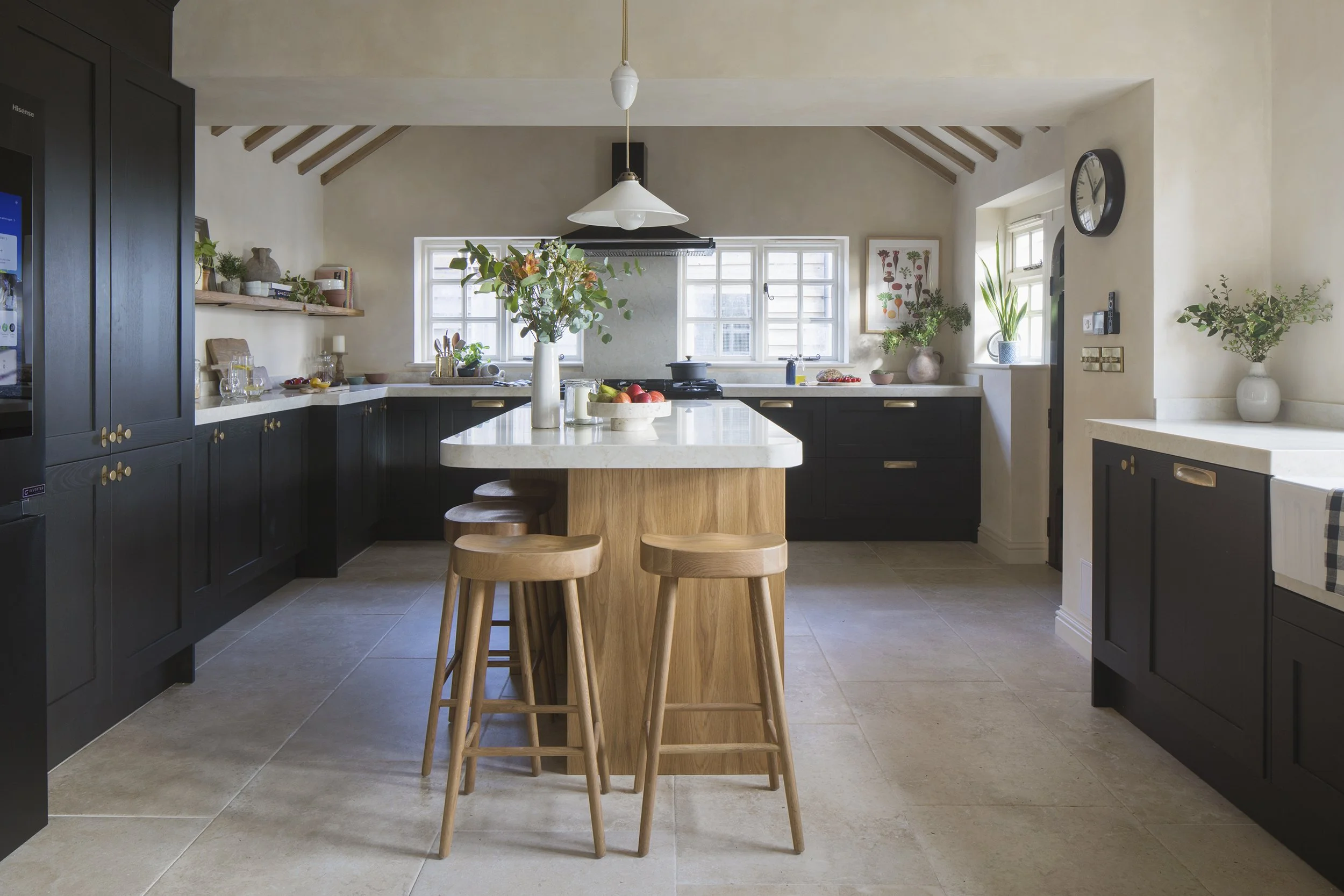
This is where hearts get broken. Walkways must be at least 1 meter wide, ideally increasing to 1.2 meters in high-traffic zones or where two people cook together. If your room is too narrow, do not squeeze in an island. It will make the space feel cramped and cheap. A well-designed peninsula or galley layout is infinitely more luxurious than a crowded island.
4. Plan Your "Landing Zones"
Safety first. Every major appliance (fridge, oven, microwave), needs a clear countertop space immediately next to (or opposite) it. When you pull a heavy roast chicken out of the oven, you shouldn't have to walk five steps to set it down.
5. Conceal the Clutter
If it doesn’t need to be seen, it should be hidden. We design "appliance garages" or breakfast stations specifically to hide kettles, toasters, and coffee machines. You open the doors for breakfast, and close them when guests arrive. It keeps the lines of the kitchen clean and calm.
6. Invest in Quiet Extraction
A noisy extractor fan is a useless one, because you will simply refuse to turn it on. Cheap motors sound like a jet engine taking off. Invest in a high-quality motor, and if possible, duct it externally rather than recirculating. Your ears (and your dinner guests) will thank you.
7. Oversize Your Sink
If you have the space, ignore the standard 45cm or 60cm sink and go wider. There is nothing more frustrating than trying to wash a roasting tray or a large chopping board that doesn’t fit flat in the basin. A single, wide "Belfast" or undermount sink (70cm+) is infinitely more practical than two small, unusable bowls.
8. Integrate Your Power
Nobody wants to see a tangle of spaghetti wires on a beautiful quartz worktop. We plan for sockets inside the pantry or hidden inside island drawers for charging phones and iPads. Keep the technology accessible, but invisible.
9. The "Triangle" Has Evolved
We used to talk about the "working triangle" (sink, fridge, oven). Today, modern kitchens are about Zones: Prep, Cook, and Clean. The goal is to ensure these zones don’t overlap in a way that causes traffic jams. Someone should be able to empty the dishwasher without hitting the person standing at the stove.
10. Durability Over Trends
Natural marble is breathtaking, but it is porous and stains easily. If you have a busy family life, you don't want to panic every time someone spills lemon juice or red wine. Consider composite stones or high-quality quartzites that offer the natural look without the maintenance anxiety.
Designing a kitchen requires balancing hundreds of technical specifications with aesthetic choices. If you want to ensure every detail is considered, from the lighting plan to the walkway clearances, I can manage the process for you. If you’re based in Kent or London and looking for a family-focused interior designer who gets how real homes work, I’d love to chat. Send me a message here to discuss your project.
How to Create a Sanctuary: 7 Steps to a Warm and Functional Bathroom
If you are planning a bathroom refresh, here are my 7 non-negotiables for a space that looks high-end but works hard for real life.
We ask a lot of our bathrooms. We want them to be practical, hygienic, and easy to clean for the morning school rush, but we also expect them to transform into a serene, candle-lit spa at 8 PM on a Friday.
Achieving this balance isn't just about picking a pretty tile. It is about understanding how materials wear, how light affects mood, and most importantly where you are going to put the shampoo bottles.
If you are planning a bathroom refresh, here are my 7 non-negotiables for a space that looks high-end but works hard for real life.
1. Trick the Eye (and Hide the Dirt) with Pattern
In smaller bathrooms or cloakrooms, people often default to plain tiles thinking it makes the room look "clean." I prefer the opposite. A patterned floor tile is a master of deception. It draws the eye across the surface, blurring the edges of the room to make it feel larger. Bonus? It is excellent at hiding dust, hair, and footprints between cleans.
2. The Golden Rule of Grout
If you take only one piece of advice from this post, let it be this: Never put white grout on a bathroom floor. It looks pristine for exactly three days. After that, it becomes a maintenance nightmare that slowly discolours. always opt for a soft grey, taupe, or dark grout for floor tiles. It grounds the scheme and keeps the floor looking fresh for years, not weeks.
3. Warm Up the "Cold" Surfaces
Bathrooms are naturally full of "cold" materials; porcelain, glass, chrome, and stone. If you aren't careful, the room can feel clinical rather than relaxing. The easiest way to fix this is with a wooden vanity. The natural timber texture adds instant warmth and softness, balancing out the hard surfaces and making the room feel like a sanctuary, not a laboratory.
4. Don't Neglect the Niche
A shower niche is not a "nice to have"—it is essential engineering. There is nothing luxurious about tripping over shampoo bottles on the shower floor or balancing soap on a chrome wire rack that rusts. Plan for a recessed niche (or even better, a full-width wall shelf) to house your products. It keeps the shower visually calm and perfectly organised.
5. Light It Like a Living Room
One single bright ceiling light is great for cleaning the toilet, but terrible for relaxing in the bath. Just like the kitchen, you need layers.
Task: Sconces either side of the mirror are the most flattering for makeup and shaving (avoid downlights directly above your head—they cast shadows).
Ambient: Dimmable overheads or LED strips in the niche create that soft, hotel-style glow for the evening.
6. Storage is the Secret to "Zen"
The reason hotel bathrooms feel so relaxing is because you can’t see the toothpaste tube, the spare toilet rolls, or the kids' bath toys. "Visual noise" creates stress. Prioritise closed storage—deep drawers in your vanity or a recessed mirrored cabinet—so that everything has a home. When the surfaces are clear, your mind is clear.
7. Inject Personality (It’s Not a Laboratory)
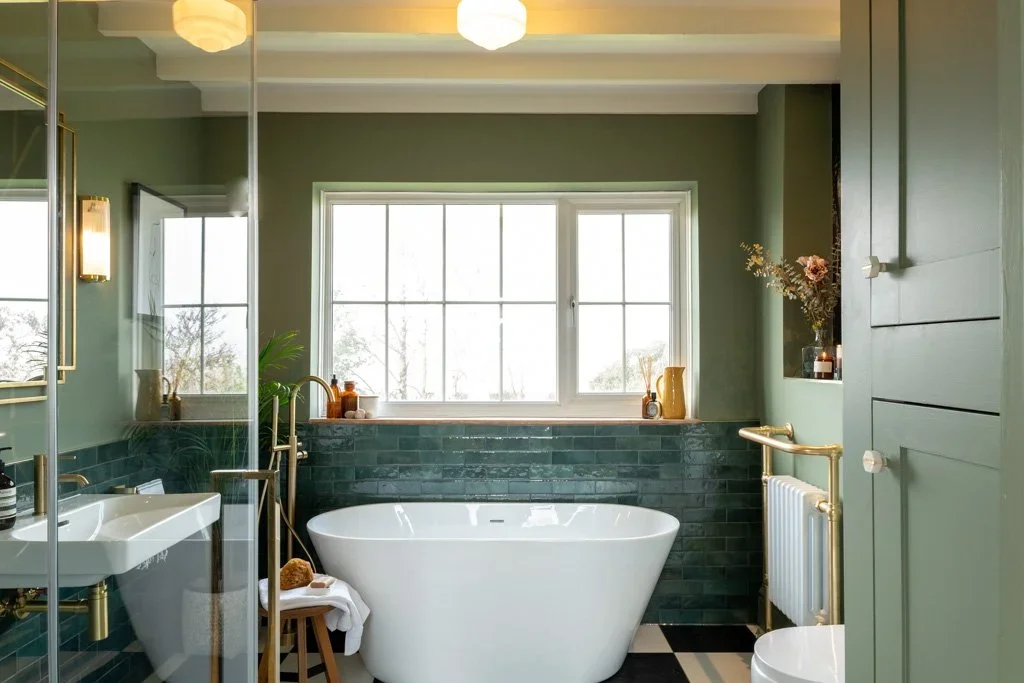
Just because a bathroom needs to be functional doesn't mean it has to be boring. Don't be afraid to treat it like any other room in the house by adding real character. Whether it’s a stunning mural, a pop of or a playful striped tile, these elements stop the space from feeling clinical. As you can see in these examples, a bold wall covering can turn a standard bathroom into a genuine design statement.
Does your bathroom need a better layout? Bathrooms are often the hardest working rooms in the house, which makes the planning even more critical. If you are struggling to plan the space or need help choosing finishes that will stand the test of time, I can help.
If you’re based in Kent or London and looking for a family-focused interior designer who gets how real homes work, I’d love to chat. Send me a message here to discuss your project.