
Heritage, Cottage or Modern: A Designer's Guide to Choosing the Right Wall Panelling
Wall panelling is the most undervalued architectural detail in residential design. Done well, it brings texture to walls that would otherwise be flat plaster, changes the proportions of a room, anchors the architecture, and turns a space from decorated into designed. Done badly, it looks like an afterthought.
I often see people choosing a panelling type before they have decided on a look. The same wall, the same height, the same room can feel like a Victorian drawing room or a seaside apartment depending on which panelling you choose and how you finish it. I tell my clients that panelling is less about pattern and more about atmosphere. The texture it adds to a room is something flat paint cannot replicate. So rather than start with a catalogue, start with a feeling. There are three distinct looks wall panelling can give a room. Here is how to recognise each one, the panelling styles that belong to it, and where in your home each one belongs.
1. The Heritage Look: Quiet Period Authority
Heritage panelling feels like it has always been there. Calm, formal and architecturally grounded. It does not draw attention to itself. It anchors the architecture of the house. This is the look you reach for in Georgian, Regency, Victorian and Edwardian homes. Principal rooms, libraries, drawing rooms, formal hallways and characterful old buildings. The styles that deliver it: Picture mouldings (wall frames). Slim mouldings applied directly to the plaster, forming framed rectangles on the wall. Almost no disruption to the existing plaster, which makes them ideal in listed properties. They look best when they reflect the proportions of the doors and windows, with quiet symmetry.
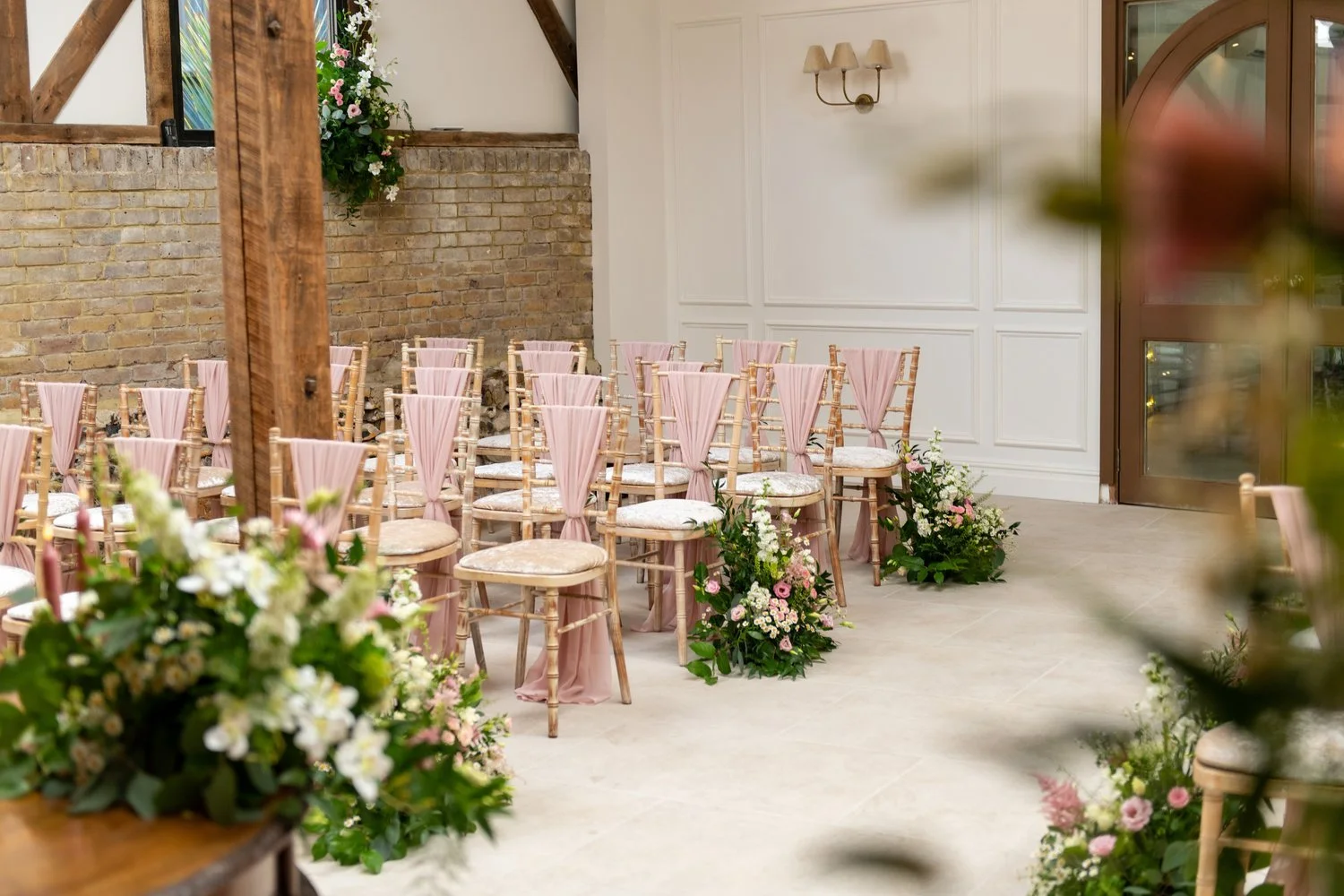

At , picture mouldings sit alongside exposed timber trusses, flint and brick. The white-painted sections are given classical wall frames that add formality to a building dominated by its original architecture. Picture mouldings as period architecture, doing their job in the background. Original timber panelling, kept and painted. When a period home already has its panelling, the right thing to do is celebrate it.
At , the panelling in the pink living room is original to the building. Full-height Victorian wall framing in solid timber, which we painted in a warm pink, both walls and panelling the same colour. The soft pink lets the joinery catch the light rather than disappearing into beige. Original panelling is a gift as it adds so much original character and texture to the home.
Raised and fielded is the grandest of the panelling styles. Raised central panels framed by thick stiles and rails, often paired with a deep dado rail and substantial cornicing. Reserved for the most architectural spaces. It is not a style to use half-heartedly. In a Georgian library or a panelled drawing room it is unbeatable. In a 1960s bungalow it looks like fancy dress. This look elongates the walls, adds weight and authority, and quietly tells the eye that the architecture is in charge.
2. The Cottage Look: Soft, Embracing, Characterful
This panelling is the most versatile cottage finish. Half-height makes a room feel intimate. Full-height makes it feel wrapped. The cottage look wraps a room and softens it. It is warm, intimate, and has hand-built in feel. This is the look that suits Oast houses, country cottages, snugs, low-ceilinged Victorian rooms and downstairs cloakrooms. Any space where you want it to feel embraced rather than imposing.
Tongue and Groove creates a flush, uniform surface. Because the boards interlock internally, the face of the wall or floor stays perfectly flat. You will see a very thin line where the boards meet ( a "v-joint" ). The shadows are just thin, sharp lines. The look is modern, clean, and sophisticated. At the , half-height tongue and groove sits behind the bed in a calm cream bedroom. The boards add texture without making a small space feel busy. The soft white finish keeps everything light.
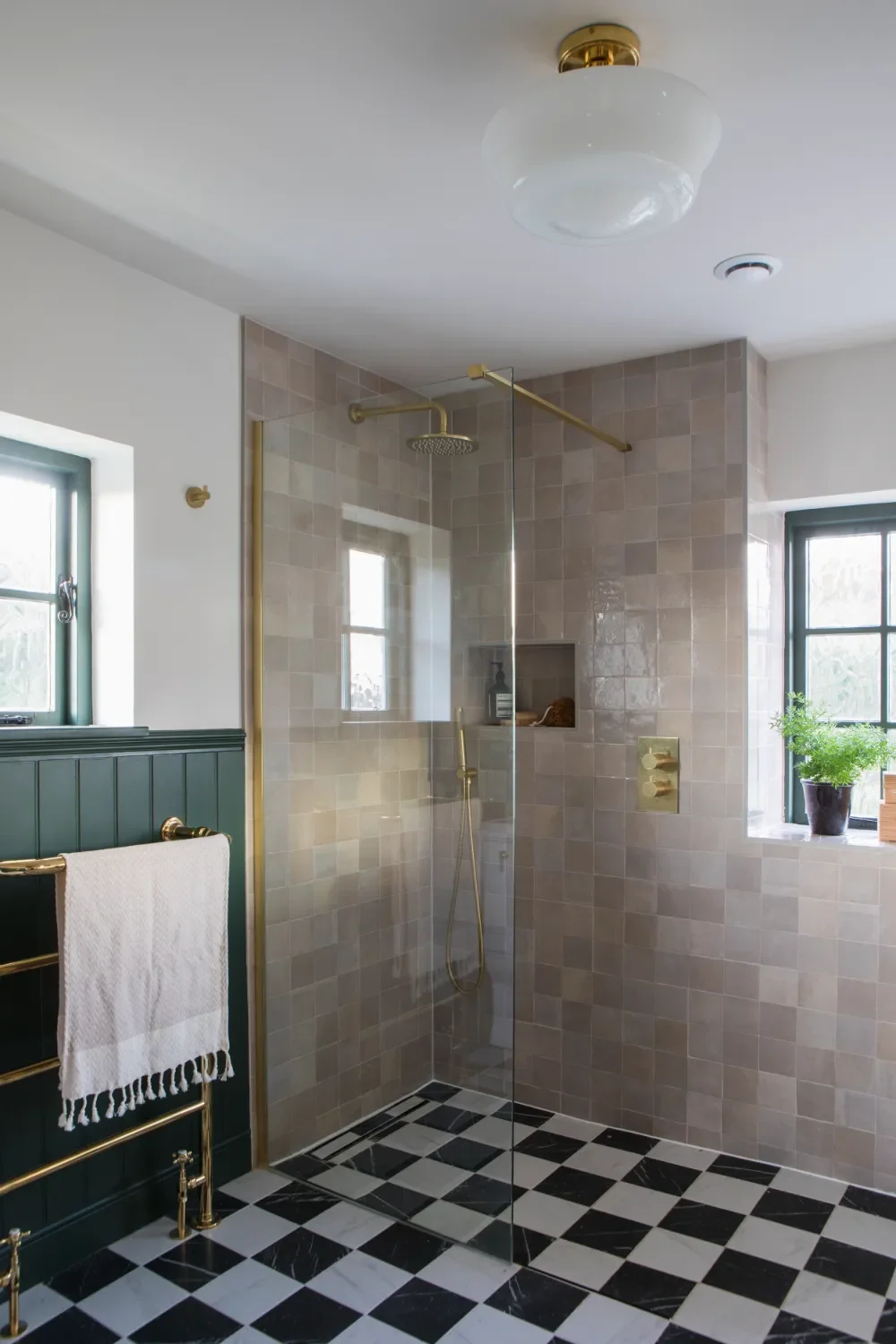
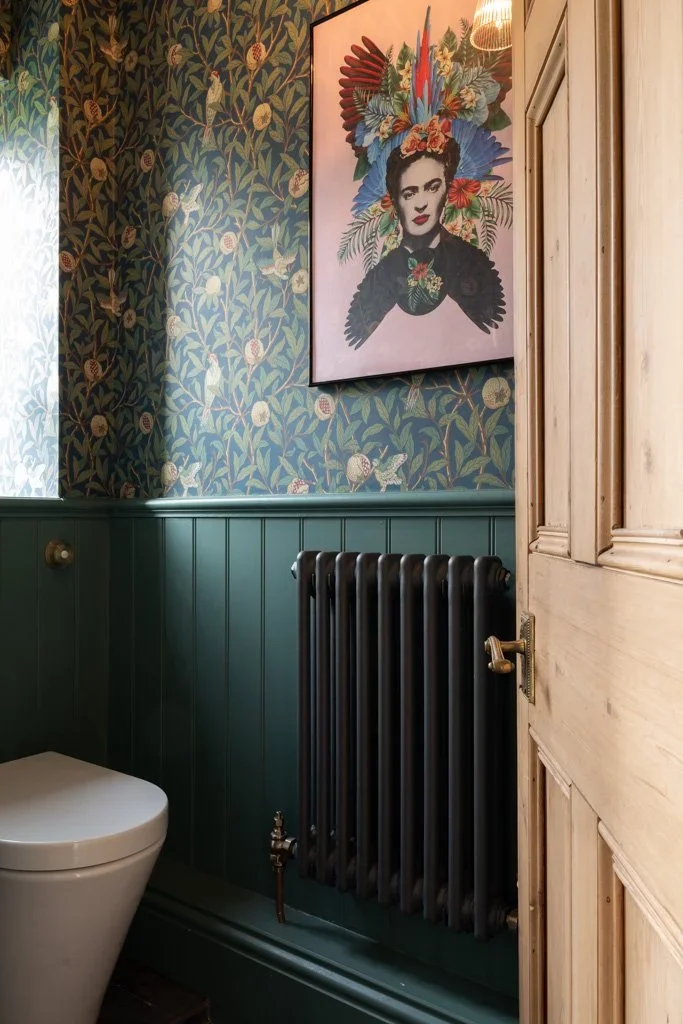
Board and Batten is high-contrast and highly textured. The flat boards are punctuated by skinny vertical strips (the battens) that stick out toward you. The joint is completely covered by the batten. Because the battens protrude they cast long shadows across the boards when light hits them from the side. This creates a rustic, "Farmhouse," look. It feels more structural and "heavy" than Tongue and Groove. At and Chloe’s Oast House cloakroom the Board and Batten sits half-height around a country bathroom and cloakroom, painted a deep heritage green. The boards bring texture into a small, hard-surface space and the eggshell finish stands up to humidity and splashes.
The same panelling style as the Sea Road bedroom is doing very different work. The narrow vertical boards with a small bead detail at each joint creates a softer and more cottage-feel. The beaded panelling visually lowers a room and makes it feel more intimate, which is exactly what you want in a snug, a small bedroom, or a kitchen where the architecture is humble.

3. The Modern Look: Sculptural, Calm, Contemporary
The modern look is panelling for contemporary homes. This feels like texture without nostalgia, sculptural rather than period and calm rather than ornamented. This is the look I reach for in modern flats, primary bedrooms, kitchen islands, powder rooms, and any space where you want craft and warmth in a contemporary language. The Shaker, is flat panels framed by clean stiles and rails. Painted in the same tone as the walls, full-height, shaker reads as quietly contemporary. It is one of the most-requested panelling treatments in my studio and probably the most versatile style. The same shaker panel can sit in a Georgian drawing room or a new-build flat depending on the colour, the proportion and the finish.
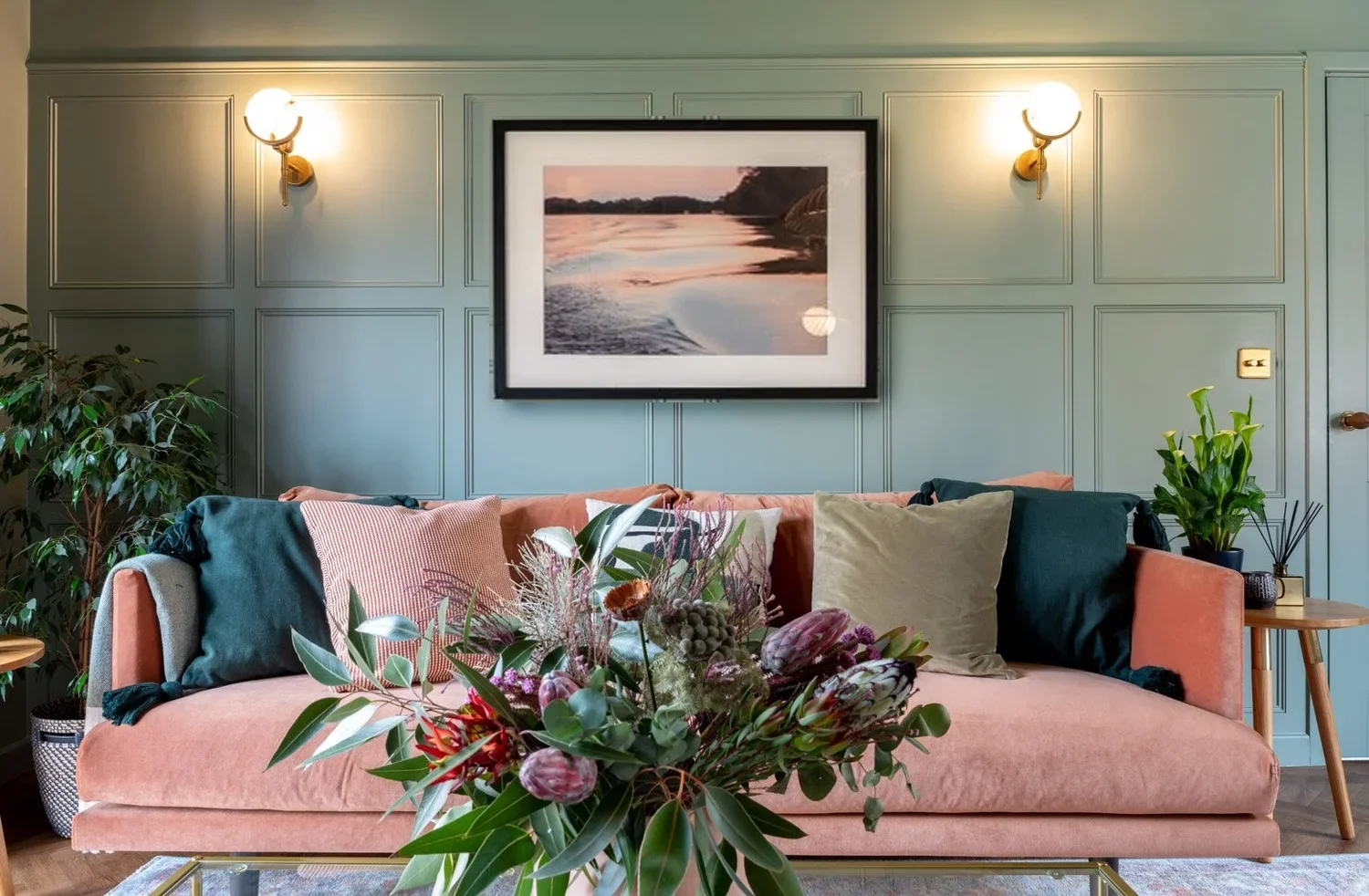
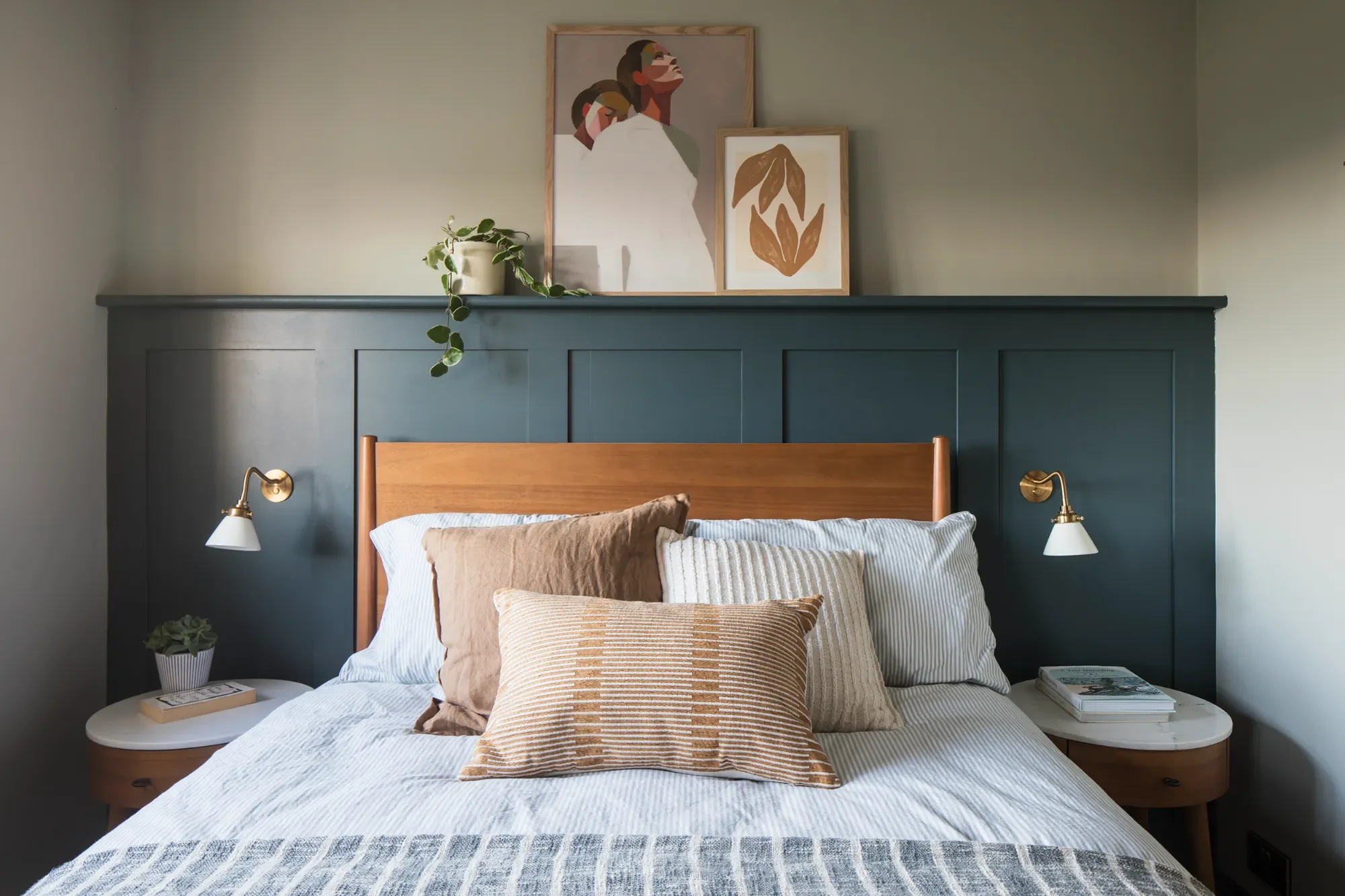
At , full-height shaker wraps the living room in a calm sage green. The panels and walls are the same colour, so the panelling reads as architecture rather than decoration. This panelling has a beading in the panels to create a nod to a heritage style. In another room at , shaker forms a half-height feature wall behind a bed, painted a dark teal, with a slim wooden picture ledge across the top. The same panelling style as Blackberry Drive, treated entirely differently. This is cleaner and has a more contemporary feel.
How to Make Panelling Work in Your Home
A handful of practical rules I come back to, again and again.
1. Paint the panelling the same colour as the walls. This is the simplest and most expensive-looking. Same colour, same finish, and the panelling becomes architecture rather than decoration. It is a calmer, more cohesive look and it is how the best country houses have always done it.
2. Use it in hard working rooms. It is ideal to use in hallways, kitchens, boot rooms and children's rooms. As it is painted in an eggshell finish panelling is more durable than plaster. It is harder-wearing than emulsion, easier to wipe clean and stands up to family life in a way that flat matt walls never quite manage.
3. Use it as a vehicle for wallpaper. One of the most beautiful tricks in classic English interiors: panel the lower half of the wall and paper the upper half. The panelling grounds the room and protects the most-touched areas. The wallpaper introduces colour, pattern and personality above. It lets you commit to a bolder paper without overwhelming the space, and it pairs particularly well with shaker, beaded, and tongue-and-groove.
4. Decide whether you want intimacy or drama. Half-height panelling grounds a room and feels intimate. Full-height panelling adds formality and elongates the walls. Think about how you want the room to feel before you choose a height. The proportion does as much work as the style.
5. Match the panelling to the architecture. Picture mouldings in a 1960s box look wrong. Fluted panelling in a Georgian rectory looks even worse. The architecture of the house tells you what the panelling should be. Listen to it before reaching for what is currently trending on Instagram.
Panelling is one of those details that looks effortless when it's right and uncomfortable when it's not. If you are planning a renovation in Kent or London and want help choosing the right approach for your home, I would be delighted to talk it through.
Have a look at my , and packages, or book a quick to get started.